











By Mark Moran - Producer-Editor, Contact - News
Big Sky Connection - A prominent animal-welfare group has released a report that names restaurant chains it says are falling behind on their commitment to ban gestation crates, small cages where poultry, pigs and other livestock are raised in the food-service supply chain. Some are doing well, the report says, but others are lagging. Comments from Devon Dear, institutional outreach manager, Animal Equality.
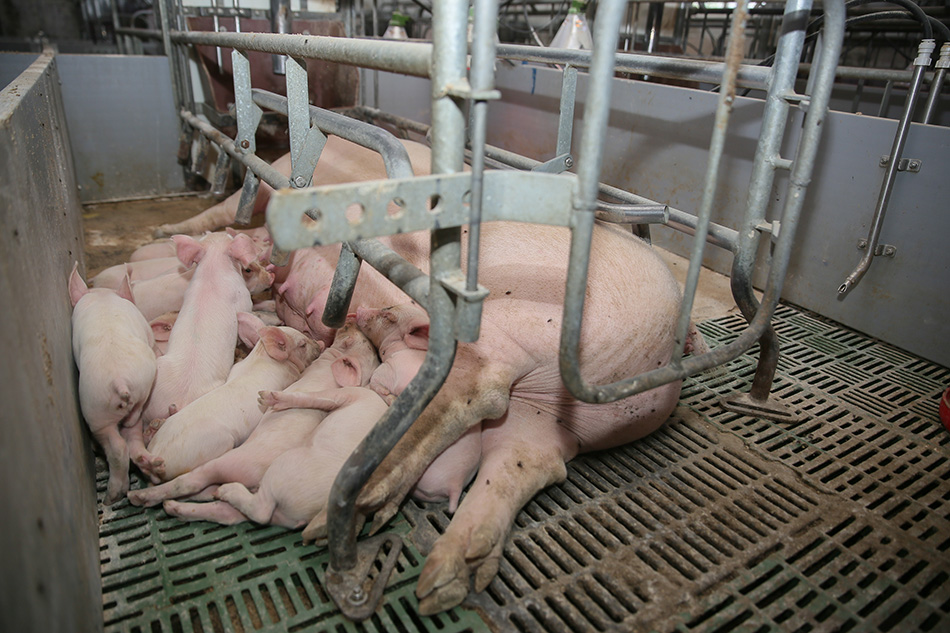
Click on the image above for the audio. Montana is not among the list of states outlawing or restricting restaurants' use of meat products from producers using gestation crates to raise their livestock for the food chain. (Adobe Stock)
Mark Moran
June 6, 2024 - A prominent animal-safety group is calling on restaurants to do more to ban the use of animal gestation crates where livestock and poultry are grown for meat.
A new report from the group Animal Equality said some chains have made progress but many are lagging.
Dozens of U.S. restaurant companies pledged to end the use of gestation crates for pregnant pigs in their supply chains back in 2008. Since then, 11 states have either restricted their use or outlawed them. Montana is not among them. In fact, one online store said it serves the Dakotas and Montana with swine-confinement facilities.
Devon Dear, institutional outreach manager for the group Animal Equality, said some restaurant chains still do not comply but she is encouraged others do.
"We've seen some really big players in this industry move away from crates," Dear outlined. "McDonald's, Wendy's, Jack in the Box, Chipotle, Shake Shack, Panera Bread; these companies have all either significantly reduced or eliminated crates. We know that it can be done successfully."
Gestation crates are about the same size as an airplane seat, and are breeding grounds for disease. The report lists Denny's, Chick-fil-A, Dunkin, and KFC among 13 companies it said have not been aggressive enough in reducing their use of the crates. Dear hopes the Farm Bill now being debated in Congress will put the issue in the spotlight.
In Montana and other Plains and Midwest states, gestation crates mirrored the proliferation of large factory farms in the 1980s and '90s, where thousands of animals are confined in limited areas. The operations have created health and environmental problems.
Dear emphasized Animal Equality is concerned with the threats those conditions pose to animal welfare.
"When you have this many animals in one place, you're getting really high concentrations of feces, you're having all of the environmental impacts of this," Dear explained. "Pigs produce a ton of waste and this has to be disposed of properly to not make nearby communities sick."
Dear argued the higher the pigs' stress levels, the higher the use of antibiotics, which often run off with manure into groundwater. Montana's factory farmers have said they are responding to consumer demand for more consistently raised, high-quality pork and other products. Animal Equality's report shows 80% of consumers are concerned about the treatment of factory-farmed pigs.
| Best Practices |
