





Big Sky Connection - Montana has received $8 million to reduce the threat of wildfire, protect watersheds and restore native species habitat in the Custer Gallatin and Helena-Lewis and Clark National Forests. The federal funding is part of a larger, 21-project initiative to reduce wildfire fuels. Comments from Melissa Simpson, regional partnership coordinator, northern region, U.S. Forest Service.
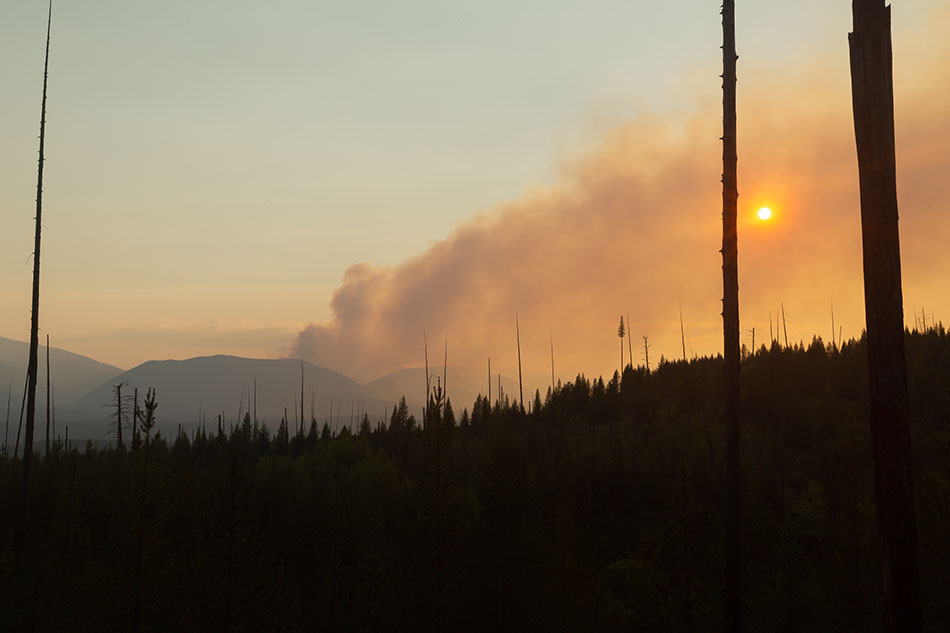
Click on the image above for the audio. As part of its Collaborative Wildfire Risk Reduction Program, the U.S. Forest Service has made $8 million available to help prevent fires in Montana by reducing hazardous fuels. (Adobe Stock)
Mark Moran
September 18, 2024 - The U.S. Forest Service is spending $8 million to reduce wildfire risk in Montana, part of a larger federal program funded by the Inflation Reduction Act.
The money allocated to Montana is part of the 14-state Collaborative Wildfire Risk Reduction Program and will be used to reduce fire fuels in the Custer Gallatin and Helena-Lewis and Clark National Forests.
Melissa Simpson, the northern regional partnership coordinator for the U.S. Forest Service, said the program also seeks to restore habitat for native species and protect the Bozeman watershed.
"Specifically, some of the treatments for the Bozeman project include things like thinning, some commercial timber harvest, pile burning, and other activities related to reducing hazardous fuels," Simpson outlined. "Also, really protecting watershed health and forest health."
Regionwide, the program funds 21 fire risk-reduction projects in national forests and mostly within the urban-wildland interface.
Simpson pointed out the projects should increase the overall health of the Custer Gallatin and Helena-Lewis and Clark National Forests, by reducing what's known as "fuel loading," which lessens the chances fires become catastrophic when they do break out.
"(It) provides better access for firefighters to respond if there were a fire in those areas," Simpson explained. "Both of these projects are in municipal watersheds, so providing healthy forests for healthy water is really important."
In one instance, the project seeks to protect the Tenmile municipal watershed, which supplies drinking water to 40,000 people in the greater Helena area.
