











September 3, 2025
Story and photo by Jim Larson
ButteNews
First came the stick.
In a letter to Don Peoples, the Environmental Protection Agency said that it intended to consider Butte-Silver Bow a Possible Responsible Party, a defendant, in its Butte Superfund action.
It was 1989, and Butte’s mines had officially closed. The city was fighting for its economic life.
Now, the Mining City was told it was being considered responsible for the ecological disaster left behind by Butte’s mining industry, a century’s worth of mine waste dumped on the ground on the Butte Hill and elsewhere in the community.
Even though the city had not placed any mine waste on the slopes of Butte Hill, under federal law it could still be held responsible for the transport of the waste through its sewer and storm drain systems. In this case, the feds held that the city’s infrastructure allowed pollutants such as arsenic and lead to flow to Silver Bow Creek. Furthermore, it said that Butte was responsible for toxic waste on some of its properties.
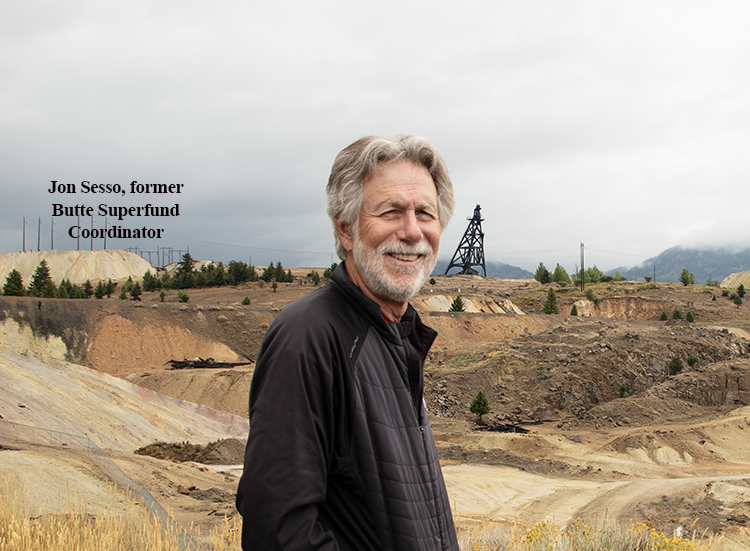
And the federal government wouldn’t just stick the citizens of Butte with a small portion of the liability. Jon Sesso, Butte’s former Superfund Coordinator noted, “Because the Superfund law is joint and several, every party is named for all of the pollution.”
The agency held out a carrot to Butte as well.
The county was invited to meet with the EPA and other PRP’s at McDuff’s Pancake and Steak House, where the parties would talk about the EPA’s proposed order on consent, the areas to be cleaned up, and how they would be cleaned up.
The letter also described a moratorium on some EPA enforcement activities that would allow for negotiations between the agency and the PRP’s.
If the moratorium didn’t result in a “good faith offer” from a PRP, The agency could then move forward on its own and litigate for expenses it incurred in the process. The agency could also begin enforcement proceedings against the PRP, the letter said.
The letter didn’t sit well with Butte-Silver Bow Chief Executive Don Peoples.
Nor did the meeting at McDuff’s
Following the meeting, Peoples fired a letter back asking by what procedure had B-SB been identified as a PRP. He argued that many of the properties that the EPA associated with the county were not under its ownership.
He also asked by what procedure the county might lose its status at a PRP. Further study, he wrote, would “relieve Butte-Silver Bow as a Potentially Responsible Party.”
In his response to People’s letter, EPA Director John Wordell noted that the EPA had only served Butte-Silver Bow a letter that was a notice of “potential liability.” There was no procedure to take away that status. Only after the agency brought “formal enforcement action in Federal District Court,” would the county be able to object to the EPA’s “liability determinations.”
Wordell also said that statements by Butte city officials and other information in the agency’s possession indicated that Butte did indeed own polluted properties.
Wordell indicated that the EPA would consider written information that would support an “affirmative defense” of the County’s position. In the meantime, Wordell urged Butte to organize with other PRPs for any upcoming negotiations regarding an “Investigation/Feasibility Study.”
BS-B did make its case in writing to the EPA, but the agency held to its position, arguing that it had no choice because Butte was a transporter of the waste, Sesso said in a May interview.
The regional administrator came out, and “we kind of had it out,” Sesso said. But despite BS-B’s protestations, the EPA said that they were naming BSB a PRP.
Finally, in December of 1992, “We got the letter,” Sesso said. Butte was officially named a Potentially Responsible Party in the EPA’s Butte cleanup action.
“And such began the journey of Butte-Silver Bow being involved in the business of Superfund, not just an observer, not just somebody who wanted to make sure it got done right, but a liable party under the law to make good whatever EPA ordered them to happen," Sesso said.”
One positive outcome of the designation was that Butte-Silver Bow had to be included in all negotiations regarding their part of the polluted area, the Butte Priority Soils Unit.
Pivoting, the county came to an agreement with Atlantic Richfield. Butte wouldn't be on the hook for paying for the cleanup, and in return, the county would not charge ARCO for access to its property, Sesso noted.
The long road to a consent decree had begun.
Next issue: the EPA gets tough.
