




City Desk
- Details
- Category: City Desk

JANUARY 14, 2026 - The Dennis and Phyllis Washington Foundation in conjunction with Montana Resources has awarded a total of $200,000 to support the Montana Folk Festival in 2026 -- $100,000 has been awarded to the Montana Folk Festival to be matched by contributions from Montana businesses.
"If the Montana Folk Festival organizers meet this challenge and raise a matching amount of $100,000," said Festival Director George Everett, "the Dennis and Phyllis Washington Foundation will then disperse another $100,000, making their total direct contribution $200,000 for 2026."
Thanks in large part to this major support, the 2026 Montana Folk Festival will return to Butte July 10,11, and 12.
Since 2008, the Foundation has been a major contributor to the success of this festival which has become the largest free of admission summer event in Montana. This grant is offered as a challenge to Montana businesses to join in helping to make the festival a self-sustaining event that will continue to bring thousands of attendees to Butte and throughout Montana.
“From the very beginning in 2008, the Montana Folk Festival has attracted thousands of visitors from across the nation and created economic, social and cultural benefits to Butte, surrounding communities and Montana that have far exceeded expectations," said Jon Bennion, Executive Director of the Dennis and Phyllis Washington Foundation.
“We are now seeking corporate sponsorships to match this generous grant,” said George Everett of the Montana Folk Festival Executive Committee. "Contributions made in the coming weeks and months will have an amplified impact thanks to this critical challenge grant,” added Everett.
“The skill and hard work of Montana Resources’ dedicated employees helps make it possible for the Dennis and Phyllis Washington Foundation to be a major contributor to the Montana Folk Festival. We are a leader in our industry and we would like to be a leader as well in encouraging other businesses to support what has become a major economic and cultural event for our area,” said Jack Standa, Montana Resources President. “We hope that corporate citizens throughout the region will see the benefits to their communities and help meet this challenge,” he added.
Sponsorships that businesses consider to meet this challenge come with many benefits as well to ensure they receive the recognition for their support that they deserve. These are described in detail on the festival website at www.montanafolkfestival.com/folkFestival-forms-sponsor.php, or call 406-565-2249.
For details about the Montana Folk Festival returning to Butte July 10-12, visit www.montanafolkfestival.com or on Facebook at www.facebook.com/mtfolkfest.
For details about the many charitable projects of The Dennis and Phyllis Washington Foundation in the Butte area and beyond, visit www.dpwfoundation.org.
And, to learn more about the work of Montana Resources in Butte, that makes this support possible, visit www.montanaresources.com.
- Details
- Category: City Desk

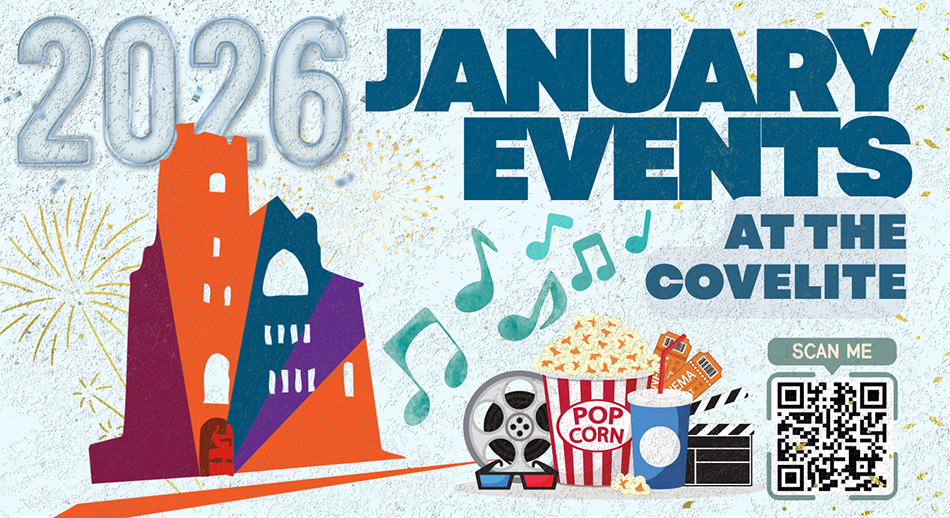
As we move through the rest of January, here is a lineup of film nights, live music, and community gatherings still to come. All remaining January events are free to attend, making it a great time to stop by, bring friends, and enjoy what’s on the calendar. We’re excited to keep the doors open and the space active with creative energy as the month continues.
For the latest updates, ticket info, and the full schedule, visit www.CovellitePresents.org
The Covellite International Film Festival returns for year 7 in Butte on April 9th-12th, 2026 - and we are accepting submissions on FilmFreeway.com/CovelliteFilmFest until January 21st
This Week
- Fri, Jan. 16th, 8PM: Off In The Woods
- FREE Live music performance https://theticketing.co/e/offinthewoods-jan16th-2026-lpc
- Off in the Woods returns to Butte for a high energy winter show filled with groove, soul, and Montana roots. The seven piece band blends original soul, funk, reggae, and open tuned acoustic music, with horns, Hammond organ, percussion, and a rhythm section that keeps the room moving. Formed by longtime friends who grew up together in Polson on the Confederated Salish and Kootenai Reservation, Off in the Woods has spent more than 13 years building their sound and touring across the region. They have shared the stage with artists like George Clinton and Parliament Funkadelic, The Wailers, Rusted Root, and The English Beat, and were most recently in Butte at 2025's Music on Main.
Next Week
- Tue, January 20th, 8-11PM: Open Mic Hosted by Aaron Armstrong sponsored by Ziply Fiber and Townsquare Media
- Wed, January 21st, 7PM: Misery (1990) Free movie on the big screen, sponsored by Clearwater Credit Union and Townsquare Media
- Sat, January 24th, 8PM: Doctor Fly and Fuzzy- B
- FREE Live Performance (https://our.show/doctorfly-fuzzyb-jan24)
- Doctor Fly brings his one of a kind live show to the Covellite Theatre. Based in Missoula, Doctor Fly blends music and storytelling into a set that feels immersive, playful, and a little otherworldly, inviting the audience along for the ride. Supporting the night is Fuzzy-B, also known as Ben Morris of Desperate Electric, offering groovy covers and an easygoing energy to set the tone. This free show is a chance to gather with friends, enjoy something a little different, and experience a night of sound, imagination, and connection.
The Following Week
- Tue, January 27th, 8-11PM: Open Mic Hosted by Aaron Armstrong sponsored by Ziply Fiber and Townsquare Media
- Wed, January 28th, 7PM: Little Shop of Horrors (1986) In partnership with BSB Public Library. Free movie on the big screen, sponsored by Clearwater Credit Union and Townsquare Media
- Sat, January 31st, 5-7PM: Cora Brown
- No Cover. Art works for sale at The Lounge
- Cora Brown is the stained glass artist behind 406 Creates. She found stained glass during the pandemic, teaching herself before learning hands-on techniques from her aunt during a visit from Norway. Her work draws inspiration from nature, historic patterns, and the imagery found in music and film, with every piece made by hand.Doctor Fly brings his one of a kind live show to the Covellite Theatre. Based in Missoula, Doctor Fly blends music and storytelling into a set that feels immersive, playful, and a little otherworldly, inviting the audience along for the ride. Supporting the night is Fuzzy-B, also known as Ben Morris of Desperate Electric, offering groovy covers and an easygoing energy to set the tone. This free show is a chance to gather with friends, enjoy something a little different, and experience a night of sound, imagination, and connection.
- Sat, January 31st, 9PM: Official Snoflinga Afterparty
- FREE Live Performance (https://theticketing.co/e/snowflinga-afterparty-jan31-2026)
- Float Like a Buffalo brings their high energy blend of rock, funk, jam, and bold brass to the Official Snoflinga Afterparty at The Covellite, turning a winter night into a lively community celebration. The Denver based six piece is known for joyful, crowd moving shows and has played venues like Red Rocks and Dillon Amphitheater while sharing stages with artists including Sting, WAR, and The Motet. With national touring momentum and a sound built to warm up any room, they are ready to light up Butte and keep the Snowflinga spirit going late into the night. Donations are greatly appreciated, and special thanks to Snoflinga, Park Street Printers, Ziply Fiber, and 51 Below for helping make the event possible.